
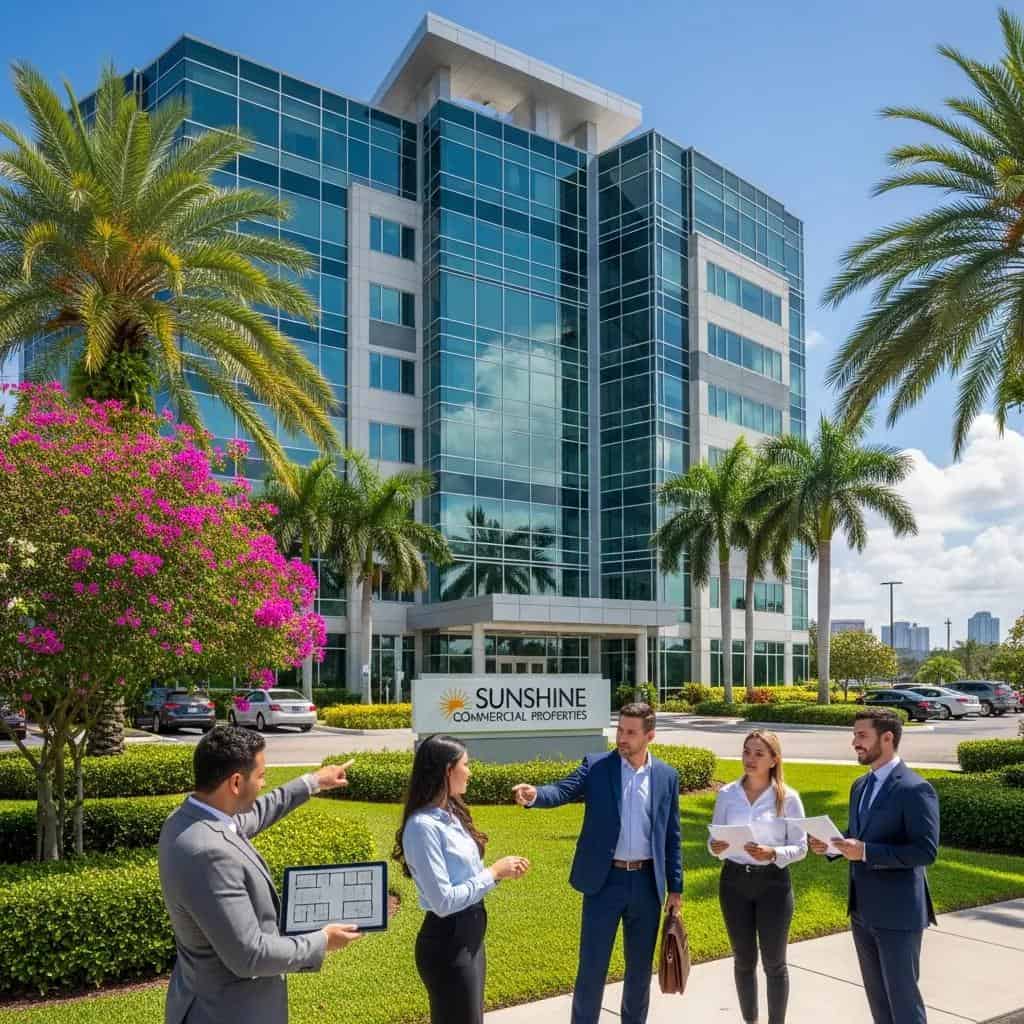
Specialized Commercial Property Management in Florida: Expert Services for Property Owners and Investors
Full-service property management in Florida coordinates operations, finance, maintenance, leasing, and tenant relations to protect asset value and maximize net operating income for owners and investors. This article explains the core services, asset-class nuances, market trends for 2025, compliance essentials, and practical tenant-retention and maintenance frameworks that owners can adopt. Property owners and real estate investors will learn how commercial property management drives occupancy, reduces operating expense volatility, and improves investor transparency through disciplined financial reporting and proactive asset strategies. Many Florida owners face region-specific challenges such as insurance pressures, tax variability, and shifting tenant expectations; applied property management provides process-driven solutions that mitigate those risks while positioning assets for long-term appreciation. Below you’ll find clear definitions of services, comparative tables for office, retail, industrial and mixed-use assets, trend analysis including sustainability and PropTech, plus the ways a specialized manager supports legal and compliance needs. Throughout, content emphasizes commercial real estate services and a comprehensive Florida property management guide so you can evaluate options, improve performance, and prioritize actions that protect cash flow and asset value.
What Are the Key Commercial Property Management Services Offered in Florida?
Commercial property management services are a coordinated set of functions—asset management, financial reporting, maintenance, leasing and tenant relations—designed to preserve and grow property value while stabilizing cash flow for owners. Asset management defines capital priorities and leasing strategy, financial reporting provides transparency and decision-grade metrics, maintenance preserves building systems and reduces lifecycle costs, leasing drives occupancy and marketing, and tenant relations secure renewals and minimize vacancy. These services adapt to Florida-specific conditions, such as hurricane preparedness, local market seasonality, and insurance cost volatility, so owners see measurable outcomes like reduced downtime, improved NOI, and higher renewal rates. The following list summarizes core services with a value statement for each to serve as a quick reference for owners and investors evaluating management options.
Commercial property management services and their primary value:
- Asset management: Prioritizes capital improvements and lease optimization to increase property value and long-term returns.
- Financial reporting: Delivers monthly and quarterly statements with variance analysis to inform investor decisions and budgeting.
- Maintenance and operations: Implements preventive programs to lower lifecycle costs and reduce tenant downtime.
- Leasing and marketing: Attracts and retains qualified tenants through reliable tenant screening across Florida to sustain occupancy and rental growth.
- Tenant relations: Manages communications, service-level agreements, and renewals to maintain steady cash flow.
The table below compares core service deliverables, typical service frequency, and owner benefits so stakeholders can quickly understand expected outputs and impact metrics before selecting a manager.
Different management functions produce measurable owner benefits through defined deliverables and cadence.
This comparison clarifies how each service maps to operational outputs and owner outcomes, helping owners prioritize which management functions to evaluate first when interviewing providers. Understanding these deliverables also prepares owners to request sample reports and KPI dashboards that demonstrate a manager’s capability and discipline.
How Does Asset Management Maximize Commercial Property Value?

Asset management maximizes commercial property value by aligning capital spending, lease strategy, and market positioning to improve net operating income and terminal value at disposition. It begins with a diagnostic—assessing the rent roll, lease expirations, tenant credit, and physical needs—then sequences high-return capital projects that boost rent or reduce operating expense. For example, targeted upgrades to HVAC efficiency or lobby amenities can justify higher rents and support lease renewals, while lease restructuring may replace below-market tenants to improve cash flow. Asset management also uses portfolio-level insights to redeploy capital across assets, and these decisions are continually validated by financial reporting and market benchmarking. Implementing a disciplined asset plan creates compounding returns through higher occupancy, stronger lease terms, and improved investor metrics.
What Financial Reporting Practices Ensure Transparency for Investors?
Transparent financial reporting combines timely statements, standardized line items, and narrative variance analysis so investors understand performance drivers and forecasts. Best practices include monthly income statements with operating expense reconciliation, quarterly balance sheets, cash-flow forecasts, and a variance commentary that explains material changes versus budget. Visual dashboards that surface occupancy, rent roll aging, and capex pacing help investors and owners quickly assess trends and risk; narrative summaries frame short-term operational issues and planned remediation. Access control and audit trails for transactions further enhance trust by proving controls over vendor payments and reserve draws. When managers commit to consistent reporting cadence and clear explanations, investor confidence rises and decision cycles shorten, enabling more agile capital deployment or disposition choices.
Which Commercial Property Types Does InvestPro Manage Across Florida?
Commercial property types in Florida include office, retail, industrial, and mixed-use assets, each with distinct management priorities such as tenant experience, operating expense allocation, logistics, and lease structure. Office management emphasizes tenant amenities, lease flexibility, and Class A/B differentiation; retail management focuses on tenant mix, foot traffic drivers, and NNN vs gross lease administration; industrial management prioritizes dock access, floor loading, and efficient maintenance; mixed-use requires integrated residential/commercial coordination and shared-service cost allocation. Location-specific considerations—Miami’s demand for flight-to-quality office assets, Tampa Bay’s retail anchors and experiential retail growth, and South Florida’s industrial logistics needs—shape service priorities and capital plans. After describing these asset types, note that InvestPro Properties Inc., The Rental Property Experts™️, manages these classes across South Florida, Miami, and Greater Tampa Bay, applying tailored approaches for each market and asset profile.
The following table summarizes asset attributes, typical challenges, and general approaches to management across these property types.
This comparison highlights how management priorities differ per asset class and market, and it shows the practical ways a manager sequences actions to address common pain points while protecting cash flow and tenant satisfaction.
What Are the Benefits of Office Property Management in Miami?
Office property management in Miami centers on preserving tenant quality and enabling flexible space solutions that reflect post-pandemic workplace preferences and a regional appetite for modern amenities. Managers who prioritize amenity upgrades, efficient building systems, and targeted leasing capture tenants seeking high-quality space and shorter-term commitments; this can translate into lower vacancy and the ability to reset market rents. Local market intelligence about submarket demand, recruitment hubs, and competitive amenities supports effective repositioning of Class B assets toward flight-to-quality tenants. Proactive lease management, including options for coworking partnerships or phased tenant fit-outs, reduces downtime between leases and creates predictable cash flow. These actions, when coordinated with capital planning, improve long-term asset valuation and tenant retention metrics.
How Is Retail Property Management Tailored for Tampa Bay?
Retail property management for Tampa Bay emphasizes anchor stability, experiential offerings, and local marketing that cultivates repeat visitation from residents and visitors alike. Managers assess tenant mix to balance grocery-anchored stability with boutique and experiential tenants that drive foot traffic; they also optimize common-area maintenance and coordinate events that reinforce center branding. Lease structures commonly include NNN leases with clear CAM reconciliations, and careful expense monitoring helps control operating costs that affect tenant rent affordability. In Tampa Bay, local promotions and partnerships with community stakeholders can boost traffic during shoulder seasons and holiday periods, which in turn supports tenant sales metrics and reduces churn. These tactics combine to maintain occupancy and support rent collection.
What Are the Latest Trends and Market Insights in Florida’s Commercial Real Estate for 2025?
Florida’s commercial real estate landscape in 2025 reflects several converging trends: increased PropTech adoption, rising emphasis on sustainability and energy efficiency, selective office rebounds with flight-to-quality demand, continued retail stabilization through experiential formats, and ongoing insurance and tax pressures affecting operating budgets. Each trend has operational implications: PropTech enhances predictive maintenance and reporting, sustainability reduces long-term energy expense and appeals to tenants, and tighter insurance markets require stronger risk-management planning. Owners should translate these trends into prioritized capital plans and operational investments that yield measurable returns. The short list below summarizes the top trends and their direct implications for property owners.
- PropTech acceleration: Improves maintenance efficiency and investor reporting through automation.
- Sustainability focus: Lowers energy costs and meets tenant demand for greener spaces.
- Office market selectivity: Rewards upgraded, flexible office environments with higher rents.
- Retail resilience: Experiential and service-led retail drives visitation and sales.
- Insurance/tax pressure: Requires proactive budgeting and contingency planning.
After considering these trends, owners benefit from integrating technology and sustainability into asset strategies; in practice, InvestPro Properties Inc. applies PropTech for tenant portals and predictive maintenance and incorporates sustainability measures into capital plans to reduce operational costs and align assets with tenant demand. These applications are factual operational implications based on market trends, and they illustrate how management adapts strategy to improve performance without asserting unavailable proprietary claims.
How Are Sustainable Practices Shaping Commercial Property Management?
Sustainable practices—LED retrofits, HVAC optimization, water-conservation measures, and energy monitoring—reduce operating expenses and appeal to tenants and investors prioritizing ESG outcomes. These measures are implemented through phased capex that targets short payback items first, then scales into longer-term investments such as solar or building controls when economics allow. Incentives and local programs can offset initial costs, and ongoing measurement via energy dashboards verifies savings and supports lease negotiations that reflect lower operating expenses. Tenants increasingly value buildings with demonstrable carbon and cost reductions, which enhances retention and simplifies marketing to ESG-conscious users. Adopting sustainability as a core operational strategy links cost savings to tenant demand and investor expectations.
What Role Does PropTech Play in Florida’s Property Management Landscape?
PropTech tools—tenant portals, IoT-enabled sensors, predictive maintenance platforms, and automated reporting systems—streamline operations, reduce downtime, and improve investor transparency through real-time data. Predictive maintenance identifies equipment issues before failure, lowering emergency repairs and downtime; tenant portals centralize requests and payments, improving satisfaction and retention; and integrated dashboards automate financial reporting and KPI tracking for owners. These technologies convert operational activity into structured data, enabling data-driven asset management and faster capital allocation decisions. When managers combine PropTech with solid vendor governance, they deliver improved service levels, clearer investor reporting, and measurable cost reductions.
Why Choose InvestPro Properties Inc. for Specialized Commercial Property Management in Florida?
Choosing a specialized manager requires evaluating local market knowledge, service breadth, transparency, and measurable outcomes; InvestPro Properties Inc., The Rental Property Experts™️, positions itself as a lead-generation information hub focused on commercial property management across South Florida, Miami, and Greater Tampa Bay, offering an Owner Guarantee & Protection Program (up to $7,500 added protection). The right manager combines financial discipline, proactive maintenance programs, leasing expertise, and tenant-relations processes that protect cash flow and grow asset value. InvestPro’s stated focus includes asset management, financial oversight, physical maintenance, and tenant relations tailored for office, retail, and industrial properties—services that align with the priorities described earlier. For owners comparing providers, prioritize clear reporting cadence, defined maintenance KPIs, and demonstrable market knowledge in the specific Florida submarket where your asset operates.
Key reasons owners evaluate a specialized manager:
- Local market expertise: Knowledge of Miami, Tampa Bay and South Florida leasing dynamics.
- Transparent reporting: Regular statements and dashboards for investor oversight.
- Service breadth: Integrated asset, maintenance, leasing and tenant services that reduce coordination friction.
If you are preparing to solicit proposals, request sample financial reports, a preventive maintenance plan, and a tenant communications protocol to assess alignment with these priorities.
What Expertise and Local Presence Does InvestPro Bring to Florida Markets?
InvestPro operates with a localized coverage model focused on South Florida, Miami, and Greater Tampa Bay and offers management strategies across office, retail, industrial, and mixed-use assets. Local presence matters because market dynamics differ by region: Miami’s office demand drivers and South Florida’s industrial logistics pressures require different leasing and capital strategies than Tampa Bay’s retail mix. InvestPro’s declared focus on those markets means its processes and vendor networks are oriented toward local permitting, contractor availability, and tenant preferences. This localized operational advantage helps accelerate project timelines and improves responsiveness to market changes without overstating proprietary achievements.
How Do Client Testimonials Reflect InvestPro’s Service Excellence?
Client testimonials and case studies typically highlight measurable outcomes such as improved occupancy, faster lease-up, clearer reporting, and more predictable budgeting; these narratives validate a manager’s operational practices and communication standards. While specific quotes are not provided here, owners should expect testimonials to reference concrete metrics (occupancy percentage improvements, reduction in downtime, capex project ROI) and narratives that show problem-solving and responsiveness. Reviewing testimonials helps prospective clients assess whether a manager’s service levels and priorities align with their own goals, and it complements quantitative due diligence such as reviewing sample reports and contracts.
How Does InvestPro Address Tenant Relations and Retention in Florida Commercial Properties?
Effective tenant relations and retention hinge on clear communication protocols, timely issue resolution, and value-added services that increase tenant satisfaction and lower turnover costs. Managers implement onboarding programs, regular satisfaction checks, service-level agreements for issue response, and renewal incentive frameworks to encourage longer lease terms. These practices reduce vacancy cycles, stabilize cash flow, and create stronger tenant-manager relationships that ease lease negotiations. Documented communication processes and measurable KPIs—response time, completion rate, and renewal rate—provide owners with transparent performance metrics that demonstrate the manager’s ability to preserve rental income and minimize disruptions.
The list below describes tenant-relations tactics that drive retention and immediate value for owners.
- Onboarding and orientation for new tenants to set expectations and reduce early friction.
- Regular satisfaction surveys and scheduled check-ins to catch issues before they escalate.
- Renewal incentives and flexible lease terms that reward long-term tenancy.
These tactics, executed consistently, create predictable occupancy and enable property teams to focus on value-adding capital projects rather than reactive problem-solving.
What Strategies Enhance Tenant Satisfaction and Occupancy Rates?
Tenant satisfaction frameworks combine onboarding, fast issue resolution, amenity access, and clear billing to create a predictable tenancy experience that supports renewals. Onboarding includes orientation packets, service contacts, and move-in coordination to reduce early operational issues. Ongoing engagement uses surveys and tenant councils to surface concerns and co-create solutions, while SLAs for response times and completion rates maintain accountability for service providers. Renewal strategies—such as modest tenant improvement allowances tied to lease extensions—balance owner capital and tenant retention outcomes. Together, these practices raise occupancy stability and reduce effective vacancy costs.
How Is Proactive Maintenance Implemented to Support Tenant Needs?
Proactive maintenance is delivered through scheduled preventive programs, vendor prequalification, emergency-response protocols, and KPI tracking that reduces unscheduled downtime and extends system life. A preventive schedule documents routine inspections, seasonal checks, and capital maintenance milestones, while vetted vendors and contract oversight ensure quality and predictable pricing. Emergency-response plans specify triage, communication, and escalation procedures so tenants experience prompt resolution and owners avoid revenue losses from prolonged outages. Tracking KPIs like response time, completion rate, and mean time between failures converts maintenance activity into measurable performance that supports budgeting and capital planning.
What Legal and Compliance Services Are Essential for Florida Commercial Property Owners?
Legal and compliance services critical for Florida commercial owners include property tax management, insurance procurement and claims support, zoning and permitting coordination, ADA and local code compliance, and contract governance for leases and vendor agreements. Property managers act as operational partners—coordinating specialists, preparing documentation for appeals, and enforcing lease terms—while advising owners to seek counsel for legal interpretations. Proactive compliance reduces the risk of fines, insurance disputes, and unexpected capital requirements. The bullets below provide an actionable checklist of high-priority compliance items owners should track with their manager.
- Property tax assessment review and potential appeals.
- Insurance coverage review, procurement oversight, and claims coordination.
- Zoning, permitting, and local code compliance monitoring.
Owners should treat the manager as a coordinator for compliance activities, ensuring documentation and timelines are clear and that legal counsel is engaged for formal actions.
Before the table below, note that the manager’s role is informational and facilitative; owners should consult legal counsel for definitive advice or representation.
The following table maps regulatory areas to practical compliance steps that managers typically help coordinate for owners.
How Does InvestPro Navigate Florida’s Property Tax and Insurance Challenges?
InvestPro’s approach to tax and insurance matters focuses on review, coordination, and contingency planning rather than legal representation: managers typically review assessment notices, compile supporting documentation for appeals, coordinate with owners and tax consultants, and monitor insurance expirations and claims activity. For insurance, managers assist with documentation, loss prevention measures, and initial claim coordination to streamline the process and preserve coverage. Budgeting for premium increases and setting appropriate operating reserves are routine management-level actions that mitigate the financial impact of market volatility. These procedural activities are informational and intended to support owner decisions and counsel engagement where formal appeals or disputes arise.
What Are the Key Legal Requirements for Commercial Property Management in Florida?
Key legal and regulatory touchpoints for commercial property managers include licensing where required, landlord-tenant statutory obligations, building and life-safety codes, zoning restrictions, and environmental and accessibility standards. Managers support compliance by tracking renewal deadlines, coordinating with contractors for required upgrades, and ensuring lease clauses reflect current laws; however, owners should retain legal counsel for interpretation and dispute resolution. Common obligations owners should expect their manager to monitor include permitting for capital work, timely maintenance for safety systems, and adherence to lease notice requirements. A clear delineation of roles between owner, manager, and legal counsel reduces risk and ensures timely compliance without surprises.
This final section completes the operational guidance owners need to evaluate property management options, prepare for legal and market pressures, and implement practical processes that enhance asset value and investor transparency.
Schedule a Free Consultation Today!
Protect Your Commercial Property in Florida
Discover how InvestPro Properties️ can maximize your asset value and streamline operations.
About the Author
Monty M has over 27 years as a commercial property manager and investor, including investing, repositioning, and selling retail and office strip centers in North Palm Beach, Jupiter, and West Palm Beach. His extensive experience provides a deep understanding of Florida’s unique commercial real estate landscape, offering invaluable insights into effective property management strategies for owners and investors.