

Landlord Insurance in Florida: Complete Coverage Guide 2025 for Property Owners and Investors
Landlord insurance is a critical financial safeguard, shielding owners of rental homes and units from property damage, liability claims, and lost rental income. In Florida, these protections are not merely advisable but essential, requiring precise tailoring to local realities. The state’s unique environmental challenges—hurricanes, pervasive flood exposure, and significant sinkhole risk—fundamentally alter how policies are underwritten, priced, and structured. This comprehensive guide, developed with insights from leading insurance experts and property management professionals, walks through the core functions of landlord insurance, delineates its crucial differences from a standard homeowner policy, and explains why a layered approach—combining robust insurance with proactive property management and strategic mitigation—represents the most reliable strategy to protect income and equity in 2025. You’ll gain a clear, authoritative breakdown of core coverages, understand the critical lender and state considerations that impact practical policy choices, identify the main 2025 cost drivers and proven strategies to lower premiums, and receive a simple yet effective framework for evaluating policies and carriers specifically for Florida rentals. We’ll also meticulously flag perils that typically necessitate separate policies, demystify the mechanics of hurricane and flood deductibles, and describe precisely when endorsements or umbrella layers become indispensable. Finally, we demonstrate how professional property management critically complements insurance and list concrete, actionable next steps owners can take to significantly improve insurability and secure rental cash flow across key Florida markets, including South Florida, Miami, and Greater Tampa Bay.
What Is Landlord Insurance and How Does It Differ from Homeowners Insurance in Florida?
Landlord insurance, formally known as a Dwelling Fire Policy (DP-3 for comprehensive coverage) or a specific landlord policy, is a purpose-built property policy designed exclusively for rented homes and units. Its primary focus is on protecting the physical building, mitigating the owner’s heightened liability exposure, and often providing crucial loss of rent coverage when a covered event renders a unit uninhabitable. The act of renting a property fundamentally transforms its risk profile: occupancy shifts from personal to effectively commercial, liability exposure escalates significantly due to tenant and visitor traffic, and interrupted rental income becomes an immediate and substantial financial concern. For these precise reasons, landlord policies either replace or substantially expand certain homeowner coverages and incorporate landlord-specific terms meticulously designed for leased properties. A deep understanding of these distinctions is paramount for owners to select the correct policy and, critically, to avoid potential claim denials that can arise when an inappropriate homeowner policy is mistakenly applied to a leased unit. Below, we provide a detailed breakdown of the main coverage components, enabling you to precisely match policy features to real-world loss scenarios and regulatory expectations.
Key Coverage Types: Dwelling, Liability, and Loss of Rent Explained
Dwelling coverage is the cornerstone, paying to repair or rebuild the physical structure—including the roof, exterior walls, and all built-in systems (plumbing, electrical, HVAC)—after a covered loss, up to your policy limits. This is typically based on replacement cost value (RCV) to ensure full restoration without depreciation. Liability coverage is activated if a tenant or visitor sustains an injury on the property and subsequently sues the owner; given Florida’s litigious environment, insurance experts routinely advise owners to consider higher liability limits (e.g., $500,000 to $1,000,000) or an umbrella policy for an essential layer of added protection. Loss of rent (also known as fair rental value or loss of use) is a vital income-protection feature, reimbursing lost rental income while a covered loss makes the unit uninhabitable, thereby preventing critical cash-flow gaps during extensive repairs. Practical examples illuminate these differences: a tenant-caused kitchen fire can trigger both dwelling and liability claims, a visitor’s slip-and-fall typically triggers liability, and hurricane damage that prevents occupancy can trigger dwelling repairs plus significant loss-of-rent benefits. A thorough understanding of these roles is crucial for owners to set appropriate limits and select endorsements that accurately reflect their income-protection needs and risk tolerance.
That covers the primary policy pieces; next we’ll look at Florida-specific perils that critically change underwriting and coverage choices, often requiring specialized attention.
Florida-Specific Risks: Hurricanes, Floods, and Sinkholes Impacting Insurance Needs
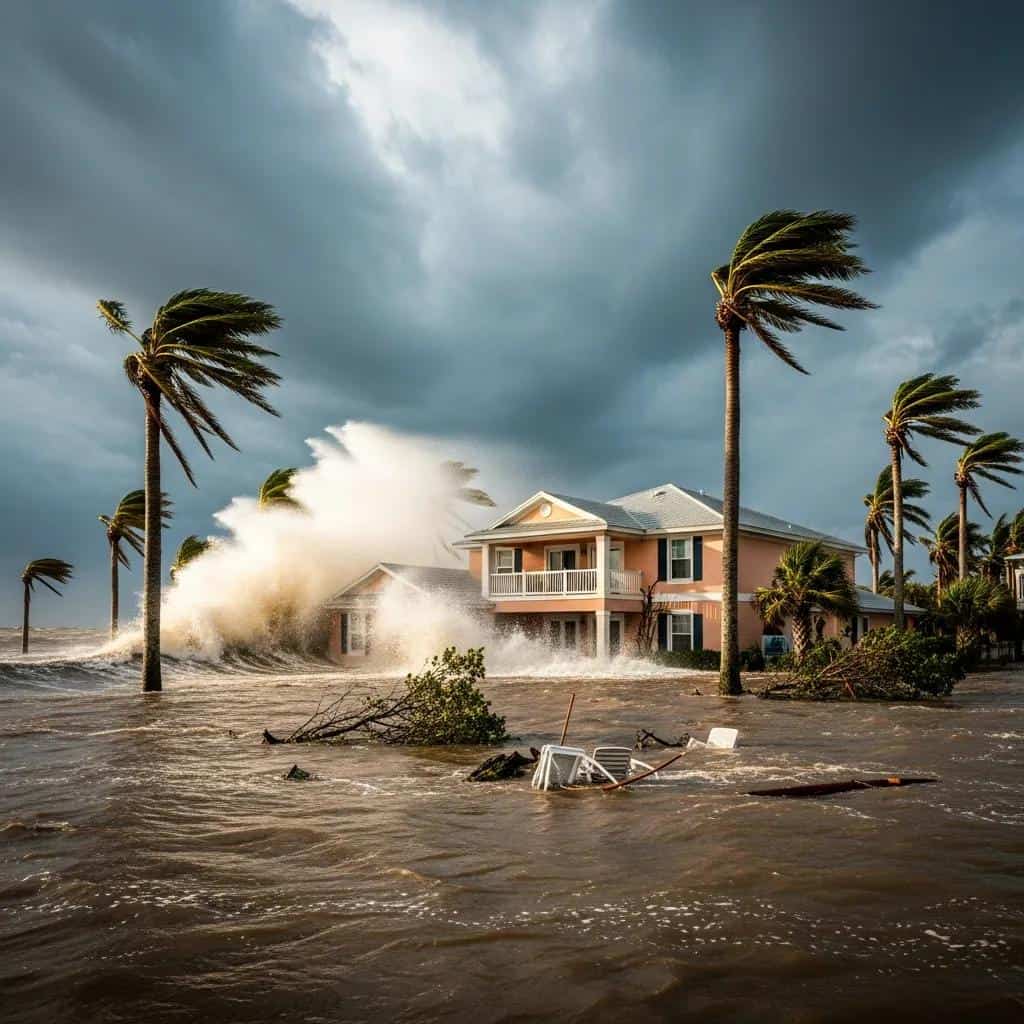
Florida landlords confront a unique confluence of perils that commonly necessitate separate coverage or specific endorsements, most notably hurricanes, floods, and sinkholes. Flood damage is almost universally excluded from standard landlord policies and mandates separate coverage, typically through the National Flood Insurance Program (NFIP) or a growing private flood insurance market. It is critical to note that NFIP policies often have a 30-day waiting period before coverage takes effect. Hurricane and windstorm losses, while often covered under the dwelling policy, frequently trigger a percentage-based deductible calculated against the dwelling limit (e.g., 2% or 5%) rather than a fixed dollar amount, which can result in substantial out-of-pocket expenses for high-value properties. Sinkhole coverage is highly restricted in many standard policies and often requires specific endorsements or even stand-alone coverage, particularly in geologically vulnerable areas identified by the Florida Geological Survey. To mitigate these elevated risks and potentially lower premiums, owners should proactively pursue wind-mitigation credits (e.g., through a Uniform Mitigation Verification Inspection Form, OIR-B1-1802) and obtain roof certifications. Documented mitigation not only lowers underwriting risk but can significantly trim premiums, as mandated by Florida Statute 627.0629. Knowing precisely which perils are separate or restricted helps avoid critical surprise gaps when you eventually file a claim.
With those Florida-specific exposures firmly in mind, the next practical and often legally driven question is whether landlord insurance is a mandatory requirement by law or by key stakeholders such as lenders and property managers.
Is Landlord Insurance Required in Florida? Legal and Mortgage Lender Requirements
While Florida state law does not explicitly mandate individual owners to purchase landlord insurance, carrying comprehensive coverage is not merely advised but is an absolute imperative. An uninsured catastrophic loss can swiftly and completely wipe out rental income, deplete owner equity, and lead to severe financial distress. In practical terms, the vast majority of owners are contractually obligated to maintain insurance because mortgage lenders routinely require adequate property coverage as a loan condition, often specifying minimum dwelling and liability limits. Furthermore, professional property managers, acting as fiduciaries, commonly request and verify proof of insurance before taking on a rental property. Because lenders and managers enforce coverage through legally binding contracts, owners almost invariably need landlord policies even though the state itself doesn’t issue a direct mandate. It is also crucial to note that documentation expectations and underwriting scrutiny have intensified significantly in 2025, making it essential to maintain up-to-date inspection reports, roof certifications, and meticulous records to satisfy lender, manager, and insurer requirements seamlessly.
State Regulations and Why Insurance Is Recommended Despite No Legal Mandate
While Florida’s statutes do not compel the direct purchase of landlord insurance, the prevailing market realities, coupled with heightened regulatory oversight and the state’s unique risk profile, render comprehensive coverage an indispensable and prudent choice. The escalating frequency and severity of severe-weather losses across Florida, combined with increasingly stringent insurer underwriting standards, dramatically elevate the financial risk of self-insuring. Insurance provides the only practical and financially viable path to restore damaged property and replace lost rent, thereby safeguarding both short-term cash flow and the long-term investment value of the asset. Routine and meticulous documentation—including detailed inspection schedules, comprehensive maintenance logs, and current roof-condition certificates—critically influences an insurer’s willingness to underwrite a policy and can demonstrably lower premiums. Carrying robust landlord insurance minimizes the catastrophic chance that a major event forces a distressed sale, foreclosure, or significant personal financial burden. According to the Florida Office of Insurance Regulation (OIR), the state’s volatile insurance market underscores the necessity of proactive risk management.
Mortgage Lender and Property Management Company Insurance Requirements
Mortgage lenders, as a standard condition of their loan agreements, invariably require proof of insurance. This proof must explicitly name the mortgagee as an additional interest (or loss payee) and demonstrate dwelling coverage adequate to protect their collateral, typically covering the outstanding loan balance or the full replacement cost of the structure. Lenders often specify minimum liability limits as well, reflecting their concern for potential legal claims that could impact the property’s value or the borrower’s financial stability. Professional property managers generally require a Certificate of Insurance (COI) listing policy dates, dwelling and liability limits, and any necessary additional-insured language. This COI is vital for managers to protect their investor clients and maintain uninterrupted operational continuity. InvestPro Properties Inc., for example, rigorously requires proof of coverage as an integral part of all management agreements, reflecting the practical and fiduciary need to document comprehensive protection before a property is placed under professional care. Owners should gather the COI early in the onboarding process to avoid delays and meticulously confirm that deductibles and any excluded perils align precisely with both lender and manager expectations, preventing future compliance issues.
What Are the Costs and Factors Affecting Florida Landlord Insurance in 2025?
Premiums for landlord insurance in Florida are highly variable, depending critically on the property’s specific location, its unique characteristics, selected coverage limits, and its inherent exposure to Florida-specific perils. In 2025, properties situated in high-hurricane or designated flood zones continue to face significantly higher rates and increasingly stringent underwriting criteria. Insurers meticulously price policies based on a complex array of factors, including the property’s distance to the coast, its age and construction type (e.g., concrete block vs. frame), the current condition and age of the roof, its prior claims history, and the presence of installed mitigation features such as hurricane straps, impact-rated windows, or secondary water barriers. The deductible structure, particularly percentage-based hurricane deductibles, which are often expressed as a percentage of the dwelling coverage, has a profound impact on the overall premium. Owners who proactively document maintenance, complete strategic mitigation upgrades, and carefully select appropriate limits can significantly influence both their annual premiums and their long-term insurability in Florida’s challenging market.
Average Premiums and Deductibles for Florida Rental Properties
Premiums for landlord insurance vary widely across Florida, primarily because flood and hurricane risk profiles differ dramatically by county, city, and even specific neighborhood. However, these 2025 ranges provide a realistic baseline for budgeting: modest inland single-family rentals typically fall into the lower to mid ranges, while coastal multi-unit buildings, especially those in high-velocity hurricane zones (HVHZ), face substantially higher premiums. Deductible choices fundamentally alter the financial equation: a higher dollar deductible reduces the annual premium but significantly raises out-of-pocket exposure on smaller, non-catastrophic claims. Conversely, percentage-based hurricane deductibles scale directly with dwelling limits and can become exceptionally costly for high-value properties, potentially reaching tens of thousands of dollars. When shopping for policies, it is imperative to weigh premium savings against potential catastrophic exposure. Proactively documenting roof condition, implementing certified wind mitigation features, and meticulously maintaining inspection records all demonstrably improve renewal outcomes and can lead to significant cost reductions over time, as these actions directly reduce actuarial risk for insurers.
Strategies to Reduce Insurance Costs: Wind Mitigation and Higher Deductibles
- Install certified wind mitigation features: Implementing roof-to-wall straps, secondary water barriers, impact-rated windows, and reinforced garage doors can qualify properties for substantial insurer credits, as mandated by Florida law, significantly reducing wind-coverage costs. A certified wind mitigation inspection (Form OIR-B1-1802) is essential for these credits.
- Document meticulous maintenance and inspections: Maintaining comprehensive records demonstrates proactive risk management, reduces the likelihood of preventable claims, and signals to underwriters a lower risk profile, potentially leading to more favorable premiums and fewer coverage restrictions.
- Consider higher non-catastrophe deductibles: Opting for a higher standard deductible (e.g., $5,000 instead of $1,000) can significantly lower annual premiums for non-catastrophic losses, while still maintaining full hurricane and flood limits where required. This strategy shifts a portion of minor loss risk to the owner in exchange for premium savings.
How to Choose the Best Landlord Insurance Policy and Provider in Florida?

Choosing the optimal landlord policy in Florida transcends merely comparing price; it demands a meticulous evaluation of coverage scope, explicit exclusions, available endorsements, the carrier’s financial strength (rated by agencies like A.M. Best), and their proven claims service record. Prioritize policies with clear dwelling replacement cost language, sufficient liability limits (often $500,000 or more), and robust loss-of-rent coverage that reflects realistic repair timelines. Critically review all exclusions (e.g., flood, sinkhole, wear and tear, mold) and carefully evaluate the necessity of endorsements such as umbrella liability, ordinance-and-law coverage (which covers increased costs to rebuild to current codes), and specific sinkhole protection. Utilize a comprehensive checklist to systematically balance cost against potential coverage gaps and the carrier’s demonstrated reliability—this rigorous approach is how you select a policy that genuinely protects both your property and your vital rental income.
Evaluating Policy Coverage, Exclusions, and Endorsements
When evaluating a policy, it is imperative to look beyond initial premium quotes and scrutinize the fine print for exclusions and endorsements that are particularly critical in the Florida market. Common exclusions include flood damage (requiring a separate policy), routine maintenance failures, wear-and-tear, and specific types of sinkhole losses. Endorsements can extend coverage to these excluded perils but will invariably increase the premium. Engage your agent with precise questions: Does the dwelling limit truly reflect the full replacement cost of the structure, including debris removal and increased construction costs? How is the percentage-based hurricane deductible applied, and what is its exact dollar exposure at your dwelling limit? Does loss-of-rent coverage extend for a realistic indemnity period (e.g., 12-24 months) to cover extended repairs after a major event? Are sinkhole or ordinance rebuilds adequately covered by specific endorsements? Watch for these red flags and consider these coverage recommendations:
- Flood excluded without private/NFIP option: Absolutely confirm separate flood options and understand the mandatory waiting periods (typically 30 days for NFIP) before you bind coverage.
- Hurricane deductible as a large percentage: Verify how the percentage translates to your maximum dollar exposure at your current dwelling limit, and ensure you have reserves to cover it.
- No loss-of-rent or a limited indemnity period: Ensure loss-of-rent covers a realistic repair timeline for your property type, especially after a major hurricane, to prevent significant income disruption.
- Lack of Ordinance or Law coverage: This endorsement is crucial in Florida to cover the increased costs of rebuilding to current building codes after a partial loss, which standard policies often exclude.
Top Landlord Insurance Companies Serving Florida Rental Properties
Rather than focusing solely on specific carriers, a more strategic approach involves evaluating carrier types—national, regional, and specialty/private flood markets—and matching their inherent strengths to your property’s unique risks. National carriers (e.g., State Farm, Allstate, Travelers) typically bring broad financial strength, standardized platforms, and extensive claims networks. Regional carriers (e.g., Citizens Property Insurance Corporation, Universal Property & Casualty) can offer local underwriting nuance, potentially faster field response, and a deeper understanding of Florida-specific risks. Specialty flood carriers (e.g., through Lloyd’s of London syndicates) provide higher limits and tailored solutions where NFIP coverage may fall short. It is paramount to check financial ratings (e.g., A.M. Best, S&P) for stability, research local claim performance and customer service reviews, and confirm whether the insurer actively participates in private flood markets for more flexible limits. Ultimately, the goal is to balance competitive pricing with proven reliability and the carrier’s demonstrated ability to effectively serve Florida-specific exposures, often best navigated with an experienced independent insurance agent.
How Does InvestPro Properties Inc. Enhance Your Landlord Insurance Strategy?
InvestPro Properties Inc. is a premier, full-service property manager dedicated to serving owners, investors, and accidental landlords across the dynamic markets of South Florida, Miami, and Greater Tampa Bay. Our operational practices are meticulously designed to complement and significantly enhance your insurance strategy by proactively lowering claim frequency and generating the precise documentation that insurers value. Through rigorous tenant screening, timely and preventative maintenance, routine and detailed property inspections, and unwavering adherence to legal compliance, we systematically reduce the exposures that commonly drive both liability and property claims. Furthermore, we offer robust operational guarantees—including an Eviction Guarantee, Pet Damage Guarantee, and Legal Compliance Guarantee—that function as practical, front-line risk controls, working in concert with your formal insurance policies. These comprehensive services and guarantees are engineered to demonstrably shrink your portfolio’s effective risk profile, helping to secure consistent coverage, smoother renewals, and potentially more favorable premium rates.
Integrating Property Management Services with Insurance for Risk Mitigation
Professional property management is a powerful tool for lowering insurance risk by implementing best practices that directly impact underwriting. This includes rigorous tenant selection processes that reduce lease violations and property damage, addressing maintenance issues promptly to prevent minor problems from escalating into costly claims (e.g., water intrusion leading to mold), and maintaining documented, regular inspections that actively discourage neglect and identify potential hazards before they trigger claims. Better tenant screening, for instance, reduces the likelihood of malicious damage or liability incidents. Proactive maintenance, such as regular HVAC servicing or roof inspections, prevents common claim triggers. Detailed inspection reports and comprehensive maintenance logs not only speed up claims handling but also provide crucial evidence that insurers use when making underwriting and renewal decisions, often leading to more favorable terms. Combining strong, documented operational practices with a clear, well-structured insurance strategy creates both significant operational efficiencies and distinct underwriting advantages for property owners.
InvestPro’s Guarantees: Eviction, Legal Compliance, and Pet Damage Protection
InvestPro’s proprietary guarantees—the Eviction Guarantee, Legal Compliance Guarantee, and Pet Damage Guarantee—are specifically engineered to reduce owner exposure to operational risks that traditional insurance policies may not fully cover, or that cause indirect but significant financial loss. The Eviction Guarantee helps manage the often-substantial costs associated with tenant removal and significantly shortens vacancy time, protecting critical cash flow. The Legal Compliance Guarantee helps owners navigate complex and ever-changing local, state, and federal regulations, thereby avoiding costly fines, legal challenges, and regulatory issues that can arise from non-compliance. The Pet Damage Protection covers common tenant-caused damage from approved pets, which can otherwise erode cash flow and lead to disputes. These guarantees function as essential operational backstops that powerfully complement your formal insurance program by reducing both the frequency and severity of incidents that would otherwise trigger claims, providing a holistic approach to risk management.
What Are the Essential Insurance Considerations for Florida Rental Properties?
Effectively protecting Florida rental properties is best achieved through a layered, strategic plan that comprehensively covers standard landlord exposures, meticulously addresses Florida-specific perils, and accurately reflects the property’s occupancy type and local regulatory environment. Essential considerations include securing separate flood coverage where mandated by FEMA flood maps or lender requirements, achieving absolute clarity around hurricane deductibles and windstorm limits, and obtaining critical endorsements for sinkhole, ordinance-and-law coverage, or specialized short-term rental scenarios when appropriate. Multi-unit buildings and short-term rentals inherently raise both liability and contents exposure, necessitating that owners consider higher liability limits, specific contents coverage for furnished units, and loss-of-rent terms that precisely match realistic repair timelines. Maintaining meticulous mitigation documentation and clear, accessible records is an ongoing best practice that demonstrably improves insurability and optimizes claims results in Florida’s complex insurance landscape.
Understanding Hurricane and Flood Insurance: Separate Policies and Deductibles
Flood protection is almost universally excluded from a standard landlord policy and requires a separate NFIP or private flood insurance policy. It is crucial to plan for mandatory waiting periods (typically 30 days for NFIP) and understand the specific coverage limits, which may necessitate supplemental private flood insurance for higher-value properties. Hurricane deductibles are frequently expressed as a percentage of the dwelling coverage (e.g., 2% or 5%), meaning they scale directly with policy limits and can become exceptionally sizable for higher-value properties, potentially representing tens of thousands of dollars in out-of-pocket expense. Comparing these percentage-based deductibles to any available fixed-dollar options is vital for financial planning. Owners must time purchases to account for waiting periods, clarify whether wind-driven rain is covered under the windstorm portion of their policy, and meticulously coordinate deductibles across policies to avoid overlapping gaps or unexpected self-insured retentions. Proactively securing these critical protections provides essential recovery options after major events and significantly reduces the risk of extended vacancy and devastating lost income.
Protecting Multi-Unit and Short-Term Rental Properties in South Florida and Tampa Bay
Multi-unit and short-term rental properties present unique underwriting and operational challenges in Florida. Multi-unit buildings often have higher common-area liability exposure, while short-term rentals involve greater contents exposure for furnished units and increased tenant turnover, which can elevate claim frequency. Short-term rentals, in particular, frequently require specialized endorsements or even separate commercial policies because transient guests fundamentally alter the risk profile, increasing liability and property damage potential. Local ordinances in South Florida and Tampa Bay may also impose specific insurance requirements or transient occupancy taxes. For multi-unit buildings, understanding the master policy’s coverage and how it shifts responsibilities between the building owner and individual unit owners is paramount. Owners should consider substantially higher liability limits, tailored contents and loss-of-rent coverage that matches the specific nature of their operations, and close coordination with property managers to maintain consistent housekeeping, rigorous tenant screening, and frequent inspection routines that actively reduce guest-related incidents. Strong professional management, combined with appropriate endorsements and specialized policies, significantly improves both guest safety and insurer confidence.
- Confirm required coverages: Verify that dwelling (RCV), liability (adequate limits), and loss-of-rent (sufficient indemnity period) are active and precisely match lender or manager requirements.
- Address separate perils: Purchase separate flood coverage (NFIP or private) and proactively consider sinkhole endorsements where geological exposure exists.
- Integrate management: Leverage documented tenant screening, regular inspections, and preventative maintenance to demonstrably reduce underwriting risk and improve claims outcomes.
- Review Ordinance or Law: Ensure this critical endorsement is in place to cover increased rebuilding costs due to updated building codes.
Following these meticulously outlined steps ensures a robust alignment of risk assessment, policy selection, and day-to-day operational practices. If you require expert assistance in matching a sophisticated insurance strategy to daily property management, consider requesting a free rental analysis or consultation—InvestPro Properties Inc. provides comprehensive property marketing, rigorous tenant screening, proactive maintenance, detailed inspections, and critical legal compliance support that seamlessly pairs with an insurance-first protection plan.
Ready to Optimize Your Florida Rental Protection?
Connect with InvestPro Properties Inc. for a personalized consultation on integrating expert property management with your insurance strategy. Protect your investment with confidence.
These points summarize practical, authoritative actions owners should take in 2025 to significantly reduce financial exposure and protect rental income continuity in Florida.
Frequently Asked Questions
1. What types of properties benefit most from landlord insurance in Florida?
Landlord insurance is critically beneficial for all types of rental properties in Florida, including single-family homes, multi-unit buildings, and short-term rental properties. Each property type presents distinct risk profiles: multi-unit buildings face higher common-area liability, while short-term rentals experience increased tenant turnover and unique regulatory challenges. These factors can lead to a higher frequency of claims, making tailored and robust insurance coverage absolutely essential. Furthermore, properties situated in Florida’s high-risk areas for hurricanes or floods require specific endorsements or separate policies to ensure comprehensive protection against these prevalent perils, as mandated by lender requirements and prudent risk management.
2. How can landlords improve their insurability in Florida?
Landlords can significantly enhance their insurability in Florida by maintaining thorough documentation of property conditions, conducting regular and documented inspections, and implementing proactive, preventative maintenance practices. Upgrading properties with certified wind mitigation features, such as impact-resistant windows, roof-to-wall straps, and secondary water barriers, can demonstrably lower underwriting risks and potentially reduce premiums, as mandated by Florida Statute 627.0629. Additionally, meticulously keeping records of rigorous tenant screening processes and ensuring strict compliance with all local and state regulations demonstrates responsible property management, a key factor insurers favor when evaluating coverage applications and setting rates.
3. Are there specific endorsements that Florida landlords should consider?
Yes, Florida landlords should critically consider several key endorsements. These include separate flood insurance (NFIP or private), specific sinkhole coverage (especially in geologically vulnerable areas), and ordinance-and-law coverage. Flood insurance is typically excluded from standard landlord policies and is often a lender requirement. Sinkhole coverage is crucial in areas prone to geological instability, while ordinance-and-law coverage is vital for covering the increased costs associated with rebuilding to current building codes after a loss, which standard policies often exclude. For short-term rentals, specialized endorsements for business operations and increased liability are also highly recommended to address the unique risks of transient occupancy.
4. What are the common exclusions in landlord insurance policies?
Common exclusions in standard landlord insurance policies include damage from floods, routine wear and tear, and certain types of sinkhole losses. Additionally, many policies do not cover tenant-caused damages unless specific endorsements for malicious damage or pet damage are added. Damage from mold, unless directly caused by a covered peril, is also frequently excluded or severely limited. It is absolutely crucial for landlords to meticulously review their policy documents to understand these exclusions and proactively consider additional coverage options to fill any potential gaps. This diligent approach helps prevent unexpected financial burdens and claim denials when incidents arise.
5. How does the location of a property affect landlord insurance premiums?
The location of a property profoundly impacts landlord insurance premiums in Florida due to varying risks associated with natural disasters, crime rates, and local regulatory environments. Properties situated in high-risk areas for hurricanes (e.g., coastal zones, High-Velocity Hurricane Zones) or designated flood zones (e.g., AE, VE zones on FEMA maps) typically face substantially higher premiums due to the increased likelihood and severity of claims. Conversely, properties in safer, inland, low-risk areas may enjoy lower rates. Insurers also consider factors like proximity to emergency services, the overall condition of the property, and local claims history when meticulously determining premiums, reflecting a granular assessment of risk.
6. What role does property management play in reducing insurance costs?
Effective professional property management plays a crucial and often underestimated role in reducing insurance costs by systematically minimizing the risks that lead to claims. Professional property managers implement rigorous regular maintenance schedules, conduct thorough tenant screenings, and ensure strict compliance with all local, state, and federal laws, all of which demonstrably lower the likelihood of incidents that trigger claims. Additionally, well-documented management practices, including detailed inspection reports and maintenance logs, enhance an owner’s insurability and can potentially lead to lower premiums, as insurers view these proactive measures as strong indicators of reduced actuarial risk and responsible asset stewardship.
7. How can landlords prepare for natural disasters in Florida?
Landlords can prepare for natural disasters in Florida by investing in comprehensive insurance coverage that includes both flood and hurricane protection, as well as meticulously maintaining the property to withstand severe weather. This includes reinforcing roofs (e.g., roof-to-wall attachments, secondary water barriers), installing storm shutters or impact-resistant windows, and ensuring proper drainage systems are in place. Additionally, having a well-communicated emergency plan for tenants, maintaining a detailed inventory of property contents, and keeping emergency supplies on hand can help mitigate damage, ensure tenant safety, and facilitate a swift recovery after a disaster strikes, thereby protecting both the property and critical rental income.
Florida Property Management Expertise
Monty M., President/CEO of InvestPro Properties, is a Florida Property Management Expert with over 27 years of experience helping landlords across West Palm Beach, Miami, Tampa, and Orlando with tenant screening, lease compliance, and risk mitigation.
Backed by a statewide team with deep experience from Port St. Lucie to Fort Lauderdale/Miami, West Palm Beach, and Tampa — and now expanding into Orlando and Jacksonville — InvestPro delivers consistent results through proven screening, documentation, and claims coordination methods. Our expertise in Florida landlord-tenant law and network of trusted local vendors help landlords minimize risk, maximize returns, and protect their investments.
Schedule a Consultation with a Florida Property Management Expert