
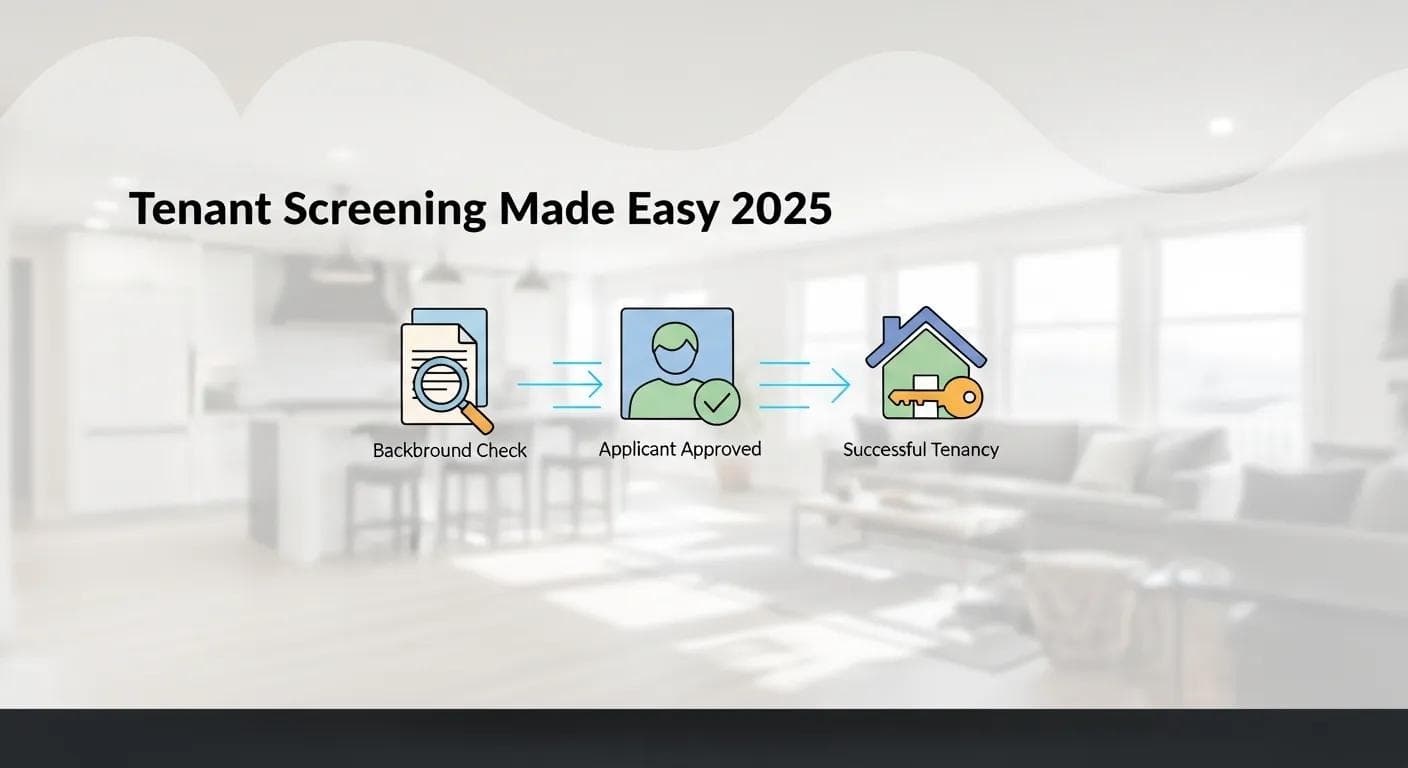
Tenant Screening Made Easy 2025
Tenant screening is the process landlords use to evaluate rental applicants by verifying identity, credit, criminal history, eviction records, and income to reduce rental risk and ensure lawful, non-discriminatory decisions. This guide explains why updated 2025 Florida rules and local Port St. Lucie practices matter for landlords who must balance fair housing obligations, FCRA compliance, and practical verification steps that reduce vacancy time and liability. You will learn the key federal and Florida laws affecting screening, exactly how to run consumer reports and credit checks legally, and a step-by-step screening workflow tailored for Port St. Lucie properties. The article previews the main sections: legal obligations and 2025 changes, practical background-check procedures, an end-to-end screening process, tenant rights and dispute handling, vendor selection with a comparison table, and best operational practices including income-to-rent guidance. Throughout the guide we integrate actionable lists, EAV comparison tables, and concise templates you can use to implement compliant screening that respects tenant rights while protecting your rental business.
What Are the Key Florida Tenant Screening Laws Landlords Must Know in 2025?
Tenant screening in Florida is governed by federal statutes like the Fair Housing Act and the Fair Credit Reporting Act (FCRA), plus state statutes that regulate fees, permissible checks, and privacy; together these laws define what information landlords may collect and how to act on consumer reports. Understanding these laws reduces risk by ensuring every consumer report request has permissible purpose, applicants receive required notices, and screening criteria avoid unlawful disparate impact. The next paragraphs summarize the federal protections, 2025 state updates, and the consent/disclosure mechanics landlords must follow to remain compliant and defensible. Below is a short list of the primary legal frameworks you should reference when designing a screening policy in Port St. Lucie.
- Fair Housing Act: Protects against discrimination based on protected classes and restricts policies with disparate impacts.
- Fair Credit Reporting Act (FCRA): Regulates use of consumer reports, requires notice/consent and adverse action procedures.
- Florida tenant screening statutes: Govern application fee practices, permissible background checks, and local privacy protections.
These laws work together to shape how you collect data and make decisions; the next subsection explains FHA protections in practical terms and how to avoid discriminatory screening.
How Does the Fair Housing Act Protect Tenants in Port St. Lucie?
The Fair Housing Act prohibits landlords from discriminating against applicants based on protected classes such as race, color, national origin, sex, religion, familial status, and disability, and Florida enforcement aligns with that federal baseline. Practically, the FHA requires individualized assessments when screening criteria disproportionately exclude protected groups, especially when relying on criminal-history or credit-based rules. Avoid blanket exclusions like “no arrests” or rigid credit cutoffs without considering mitigating circumstances, because those approaches can produce disparate impact claims. Implement a written screening policy that documents objective criteria, outlines acceptable compensating factors, and shows how individualized assessments are conducted to protect both tenants and landlords from legal risk.
What Are Florida’s Specific Tenant Screening Regulations for 2025?
Florida’s state rules that affect tenant screening cover application fee norms, allowable background checks, and the permissible use of eviction records; in 2025 some clarifications focused on disclosure timing and data handling practices. Landlords must follow state guidance about what checks are permitted—credit, criminal, eviction, and identity verification—while respecting sealed or expunged records as not reportable when applicable. Recent 2025 clarifications emphasize transparent fee disclosures and require that applicants receive clear written notice of any consumer-report use before screening occurs. When building your process, document which checks you will run, the approximate cost/turnaround expectations, and that you will obtain written consent prior to ordering consumer reports.
What Consent and Disclosure Requirements Must Landlords Follow?
Under the FCRA and state practice, landlords must obtain informed written consent before obtaining a consumer report and provide clear disclosure when an adverse action is taken based on that report, including a notice that identifies the reporting agency and rights to dispute. Consent language should state that the landlord may obtain consumer reports for tenancy decisions, name the purpose (rental eligibility), and be signed or acknowledged prior to the report request. If an applicant is denied or subjected to a less-favorable term because of a consumer report, provide an adverse action notice with the required FCRA elements and a copy of the report if applicable; retain records of consent, notices, and decision rationale for audit readiness. A short compliance checklist helps operationalize these steps and ensures consistent, defensible handling of consumer data.
How Do You Conduct a Tenant Background Check in Port St. Lucie?
Conducting a tenant background check is a staged workflow: obtain written consent, verify identity, order credit and eviction reports from FCRA-compliant sources, and supplement with criminal-history checks as allowed—each step serves a specific risk-reduction purpose. Proper sequencing reduces wasted expense and speeds decisions: pre-screen first, confirm identity, then run consumer reports only for qualified applicants. The following table compares common check types with typical turnaround and cost to help you choose the right combination for Port St. Lucie properties.
Different check types provide distinct data and timeframes for screening decisions.
This comparison shows how combining identity verification, credit, eviction, and criminal checks creates a fuller risk profile; next we’ll list which specific background checks are permissible and common limitations in Florida.
What Types of Background Checks Are Allowed for Florida Tenants?
Florida landlords commonly use credit reports, eviction-history searches, criminal background checks, and sex-offender registry checks; each is allowed when used in compliance with FCRA and state privacy rules for tenant screening. Criminal-history checks should be applied fairly and with individualized consideration to avoid disparate impact, especially for applicants with disabilities or others protected under the FHA. Note limitations: sealed or expunged records are generally not reportable, and reliance on arrest records alone can be problematic. Use reputable, FCRA-compliant vendors for consumer reports and combine multiple sources to reduce false positives while documenting decisions.
How to Obtain and Use Tenant Credit Reports Legally in Florida?
To use tenant credit reports, secure a permissible purpose and written authorization, ensure the reporting agency is FCRA-compliant, and interpret results in context—credit scores are one input, not an automatic exclusion. Provide clear consent forms that describe the report type and purpose, and honor FCRA adverse action procedures if a report leads to denial or a different offer. Avoid discriminatory application by combining objective thresholds with flexibility for compensating factors like higher security deposits, co-signers, or documented income stability. Keep records of consent, the report copy, decision rationale, and any communication to support compliance in case of tenant disputes.
What Are the Essential Steps in the Tenant Screening Process for Port St. Lucie Landlords?
An effective screening process follows a consistent, documented sequence from pre-screening to final decision: pre-qualify applicants, collect a complete rental application, obtain written consent for reports, verify identity and income, run consumer reports, and apply objective decision criteria. Consistency across applicants minimizes discrimination risk and improves tenant quality while shortening vacancy cycles through faster, more accurate decisions. Below is a numbered procedure you can implement as a standard operating flow to ensure lawful and efficient screening.
Follow these six essential screening steps to ensure compliance and efficiency:
- Pre-screen: Confirm basic eligibility criteria by phone or email before requesting an application.
- Collect application & consent: Obtain full rental application and signed consumer-report authorization.
- Verify identity and income: Check ID, SSN trace, employment verification, and pay stubs.
- Order consumer reports: Run credit, eviction, and criminal checks from FCRA-compliant vendors.
- Apply decision rubric: Use documented thresholds and individualized assessments for adverse history.
- Notify & record: Provide required adverse action notices, document decisions, and retain records.
This step-by-step process ensures consistent administration of checks and creates audit trails; the next subsections explain pre-screening best practices and decision-making with adverse action mechanics.
How to Pre-Screen Applicants and Collect Rental Applications Properly?
Pre-screening reduces unnecessary applications by quickly confirming essential qualifiers like move-in date, number of occupants, and baseline income without probing protected characteristics. Ask neutral questions that establish eligibility—desired lease term, approximate monthly income, rental history timeframe—and request necessary documents such as photo ID, recent pay stubs, and references after initial qualification. Use a standardized rental application form that captures identity, employment, residence history, and consent for background checks to avoid inconsistent questioning that can trigger discrimination claims. Keep a brief pre-screen script and a checklist of required documents to speed processing and ensure every applicant receives the same treatment; this uniformity protects both tenants and landlords.
How to Make Screening Decisions and Issue Adverse Action Notices?
Make screening decisions with an objective rubric that weights credit, income-to-rent ratio, rental history, and criminal/eviction factors while allowing documented mitigating circumstances or compensating factors. If a consumer report contributes to an adverse action—denial or different terms—provide an adverse action notice that includes the reporting agency’s name, a statement of no further responsibility by the landlord for errors in the report, and a summary of rights to dispute inaccuracies under FCRA. Record the decision process, reasons, and evidence used to reach the decision so you can justify outcomes if challenged. Timely, transparent communication and a consistent decision log are essential to defend against disputes and ensure compliance.
What Tenant Rights Should Port St. Lucie Landlords Respect During Screening?
Tenants have rights related to notice and consent, privacy of their personal data, non-discrimination, and access to dispute inaccurate information; honoring these rights reduces legal exposure and fosters trust. When consumer reports are used, applicants must be informed and provide written consent, and they have the right to receive adverse action details and dispute report inaccuracies with the reporting agency. Understanding these protections helps landlords design processes that are both effective and respectful of tenant rights, and the next subsections drill into privacy/non-discrimination protections and the dispute resolution timeline landlords must follow.
How Are Tenant Privacy and Non-Discrimination Protected Under Florida Law?
Tenant privacy limits what landlords may request and how long they can retain sensitive applicant information; best practice is to collect only what is necessary for eligibility, secure stored data, and delete or redact unnecessary personal data after the decision. Anti-discrimination rules under the Fair Housing Act and Florida law prohibit differential treatment based on protected characteristics and any screening policy that produces disparate impact must be defensible by business necessity and individualized assessment. Implement data minimization, role-based access to applicant records, encryption for stored files, and a documented retention schedule to reduce privacy risk. These operational controls support lawful, fair screening and reduce the likelihood of complaints or regulatory scrutiny.
What Are Tenants’ Rights to Access and Dispute Screening Reports?
Under the FCRA, tenants can request their consumer reports and dispute inaccurate information directly with consumer reporting agencies; landlords should facilitate this process by providing report source details and cooperating when legitimate disputes arise. When notified of a dispute, landlords must allow time for the reporting agency to reinvestigate and should avoid making irreversible decisions until disputes are resolved. Provide clear instructions in denial communications explaining how applicants can obtain and challenge report contents, and maintain records of any follow-up or corrected information. Responding promptly and transparently to disputes protects applicants and minimizes landlord liability.

Which Are the Best Tenant Screening Services Available in Port St. Lucie and Florida?
Choosing screening services requires comparing national platforms and local vendors on FCRA compliance, data sources, turnaround, cost, and local court coverage to ensure accurate eviction and criminal records for Port St. Lucie properties. A practical comparison table helps you evaluate providers on the key attributes that affect decision quality and operational efficiency. Below is a compact EAV-style comparison to guide vendor selection and vendor vetting.
Compare screening options across key attributes to select a provider that balances accuracy, speed, and compliance.
This table highlights tradeoffs between speed, local accuracy, and compliance; next we list selection criteria you should prioritize when evaluating vendors.
What Criteria Should Landlords Use to Choose a Tenant Screening Service?
When choosing a screening service prioritize FCRA compliance, breadth of data sources (national credit bureaus, multijurisdictional eviction databases, court records), turnaround time, pricing transparency, and clear adverse-action support. Verify that the provider issues reports suitable for adverse-action notices, that their data sources include St. Lucie County records, and that they provide consumer-report dispute support if errors arise. Ask for sample reports, compliance documentation, and references from other landlords to validate accuracy and responsiveness. Prefer vendors that offer identity verification, SSN trace, and transparent pricing to reduce surprises during high-volume screening periods.
Which Local Providers Offer Reliable Tenant Screening in Port St. Lucie?
Local providers can offer superior coverage of St. Lucie County court records and personalized support, but vet them for FCRA compliance and ask how they source and verify records to avoid reliance on incomplete or outdated data. Request written details on their data sources, turnaround, sample reports, and procedures for handling disputes to ensure operability with your adverse action workflow. Tradeoffs often include slightly slower turnaround or manual fees in exchange for deeper local court research, which can be valuable when eviction histories are a significant screening factor. When selecting a local vendor, include a trial period in your evaluation to confirm data quality before making the service part of your standard operating process.
How Can Port St. Lucie Landlords Implement Best Practices for Tenant Screening in 2025?
Adopting best practices in 2025 means using objective, documented criteria (credit thresholds, income-to-rent ratios), consistent recordkeeping, staff training on fair-housing rules, and regular audits to ensure the process remains compliant and effective. Implementing an income-to-rent guideline, standardizing application materials, and training staff on non-discriminatory questioning reduces risk and improves the quality of tenant selection. The following recommended criteria and ratios establish a defensible baseline you can adapt with documented exceptions.
Below are recommended objective screening criteria to use as a starting point for consistent decision-making:
- Credit score baseline: Consider a minimum score range as a guideline rather than an absolute rule.
- Income-to-rent ratio: Use 2.5–3.0× gross monthly income as a typical eligibility threshold.
- Rental history: Require at least one year of positive rental references or equivalent verifiable payment history.
- Compensating factors: Allow documented savings, co-signers, or steady employment to offset borderline metrics.
These criteria offer a balanced approach to qualifying applicants while leaving room for individualized assessments; the final subsection discusses records and staff training to operationalize these practices.
What Are the Recommended Screening Criteria and Income-to-Rent Ratios?
A common and defensible income guideline is that applicants demonstrate gross monthly income of 2.5 to 3 times the monthly rent, which balances affordability concerns with market realities for Port St. Lucie. Use credit score thresholds as contextual indicators—e.g., treat scores under a chosen baseline as a flag requiring additional verification or compensating factors rather than automatic denial. Include rental-history checks and require verifiable employment or consistent income documentation to corroborate claims. When deviating from standard criteria, document compensating factors and the rationale for approval to preserve consistency and reduce disputes.
How to Maintain Records and Train Staff for Fair and Effective Screening?
Maintain a secure recordkeeping system that stores applications, signed consents, consumer reports, decision rationales, and adverse action notices for the recommended retention period; limit access to authorized personnel and regularly audit records for completeness. Train leasing staff on fair-housing rules, proper pre-screening scripts, data privacy, and how to apply the decision rubric consistently, including how to evaluate compensating factors. Conduct periodic compliance audits and refresher training to ensure policies reflect 2025 legal clarifications and local court practice changes. Consistent documentation and regular training create institutional memory, reduce bias, and make your screening process scalable and defensible.
About the Author
Rick M., Licensed Leasing Agent & Board of Realtors Member
Rick has 14 years of experience screening, vetting, and placing tenants across Florida, specializing in single-family and multifamily rentals in Port St. Lucie and surrounding markets. He’s helped property owners maximize returns while minimizing risk, offering hands-on expertise in tenant screening, application review, leasing compliance, and background verification.
“My goal is simple: help property owners find the right tenants the first time, legally and efficiently, so they can focus on growing their investment without the stress of problematic rentals.”
— Rick M., Licensed Leasing Agent & Tenant Placement Expert
Ready to Streamline Your Tenant Screening?
Contact us today to learn how our expert services can help you find the perfect tenants and protect your investment.