
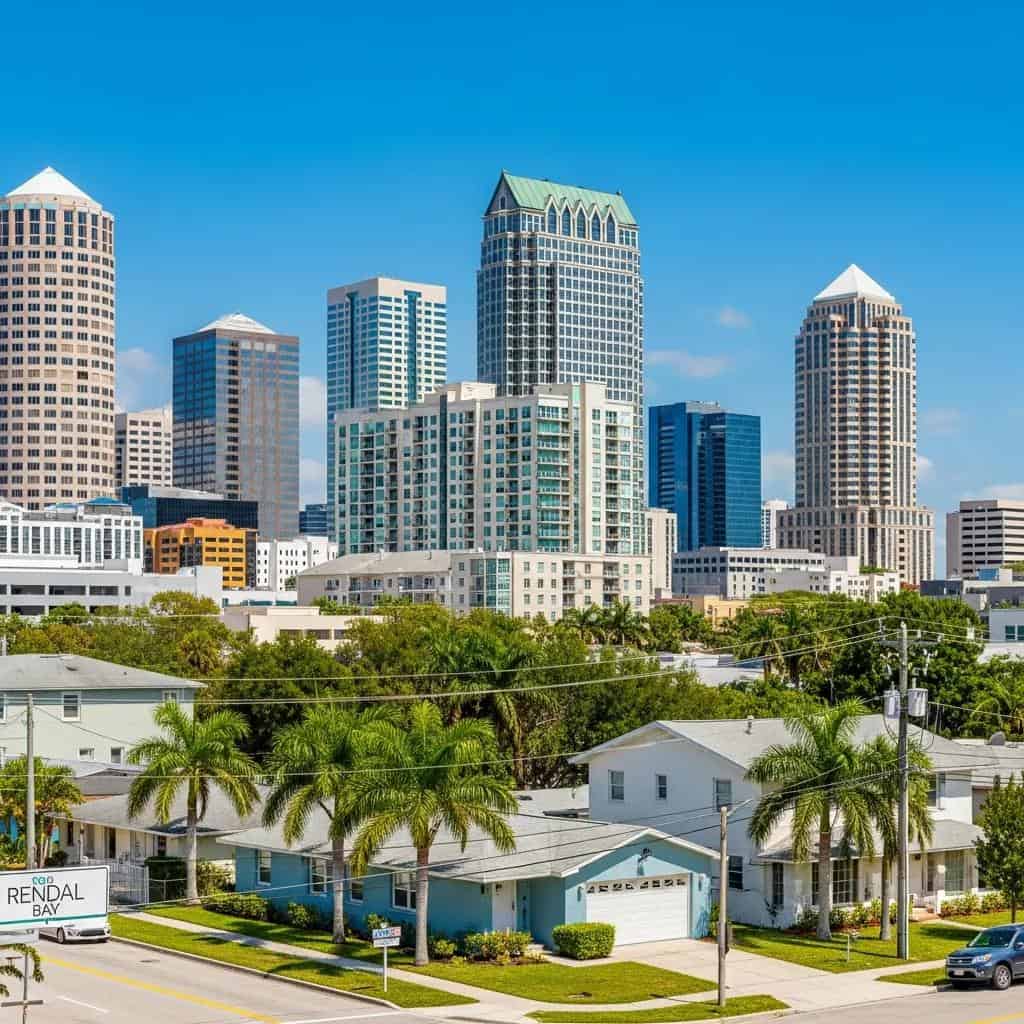
Tampa Bay Rental Market Report 2025: Trends, Investment Opportunities, and Property Management Insights
This 2025 Tampa Bay rental market report pulls together neighborhood performance, leasing activity, and practical investor strategies to help owners and buyers make smarter choices. We break down the forces behind rent movement, vacancy shifts, and days-on-market across the region, then turn those patterns into clear investment and property-management actions. You’ll find which submarkets look most promising, how property types and targeted upgrades affect returns, and which operations reduce risk while improving cash flow. We also cover landlord compliance priorities for 2025 and offer a short forecast to help you position for 2026–2027. Throughout, we show how InvestPro Properties Inc.’s full-service management solves common owner pain points while keeping the analysis focused on market-driven investment guidance.
By Sarah J, Senior Market Analyst at InvestPro Properties Inc.
With deep roots in the Tampa Bay real estate market, Sarah leverages proprietary local insights and extensive experience to guide investors through the region’s dynamic rental landscape. Her analysis is grounded in first-party observations and data from across Tampa, St. Petersburg, Clearwater, and the surrounding areas, providing actionable intelligence for property owners.
What Are the Key Tampa Bay Rental Market Trends in 2025?
In 2025, the Tampa Bay rental market, encompassing vibrant areas like **Downtown Tampa, St. Petersburg, Clearwater, and the growing Brandon/Riverview corridor**, shows uneven rent growth, differing vacancy patterns across neighborhoods, slower but more selective leasing, and continued multifamily supply in certain corridors. Job and population gains still underpin demand, but local new construction and affordability pressures produce sharply different outcomes by neighborhood. From our proprietary observations, we see the market as many microcycles: some pockets offer strong yield capture, others need repositioning to hold occupancy. Recognizing these structural drivers helps investors match neighborhoods and property types to their risk tolerance and value-add plans.
“From our 27+ years of experience investing and managing properties across Florida, we’ve seen that success in a market like Tampa Bay hinges on granular, neighborhood-specific insights. General trends are useful, but understanding the micro-cycles in St. Pete, Clearwater, or even specific pockets of Tampa is what truly drives investor returns.”
— Monty M., President/CEO, InvestPro Properties Inc.
Key trends investors should watch in 2025 include:
- Uneven rent growth across submarkets, with walkable urban and transit-friendly areas commanding higher premiums. For instance, **Downtown St. Pete and South Tampa** continue to see robust demand, while some newer developments in **Clearwater** might experience more moderate increases.
- Variable vacancy as newly delivered multifamily inventory raises availability in some corridors while older stock stays tight. We’ve noted higher availability in parts of **Brandon/Riverview** due to recent construction, contrasting with consistently low vacancy in established **Tampa Heights** or **Seminole Heights**.
- Longer days on market in oversupplied or price-misaligned micro-markets, which calls for sharper marketing and pricing.
- Stronger emphasis on tenant quality and screening as demand becomes more selective.
The quick-reference metrics table below summarizes these market traits for rapid investor scanning and to frame neighborhood-level decisions.
The table uses broad, qualitative indicators to orient investors rather than exact numeric claims.
This table clarifies how rents, supply, and leasing speed interact and sets up the neighborhood-level analysis that follows.
How Have Rental Prices Evolved Across Tampa Bay Neighborhoods?
In 2025, rental pricing across Tampa Bay follows a distinct neighborhood gradient, a pattern we track closely. Proximity to jobs, transit, and amenities still supports premium rents. For example, **South Tampa** and **Downtown St. Pete** consistently command higher rents due to their walkability and access to employment hubs. Single-family rentals and multifamily product are tracking differently — single-family units often benefit from household formation and space needs, particularly in family-friendly areas like **Brandon** and **Riverview**, while multifamily performance depends on how quickly recent deliveries absorb. We’ve observed that newer luxury multifamily units in **Downtown Tampa** face more competition than established, well-maintained properties in areas like **Seminole Heights**. When modeling cash flow, account for product mix since condos and short-term rentals have distinct operational profiles. A few tight pockets, such as historic districts in **Ybor City** or specific waterfront communities in **Clearwater**, show stronger rent resilience due to constrained supply or targeted tenant demand, creating selective opportunities for outsized rent capture.
Neighborhood rent paths naturally lead into vacancy and leasing dynamics, which determine how quickly owners turn market demand into cash flow.
What Are the Current Vacancy Rates and Days on Market in Tampa Bay?
Vacancy and days on market reflect the supply-demand balance and the effectiveness of marketing in 2025. Stabilized, amenity-rich neighborhoods generally show low vacancy; areas with concentrated new construction see higher availability. Days on market extend where price or condition doesn’t meet tenant expectations or where marketing isn’t tuned to current renter search behavior. For investors, the implication is straightforward — competitive pricing, well-prepared listings, and modern marketing shorten lease-up and protect net operating income by reducing concessions and downtime.
Investors focused on lease velocity should combine market-aligned pricing with targeted marketing and solid screening to shorten time-to-occupancy and maintain rent momentum.
Which Tampa Bay Neighborhoods Offer the Best Rental Investment Opportunities in 2025?
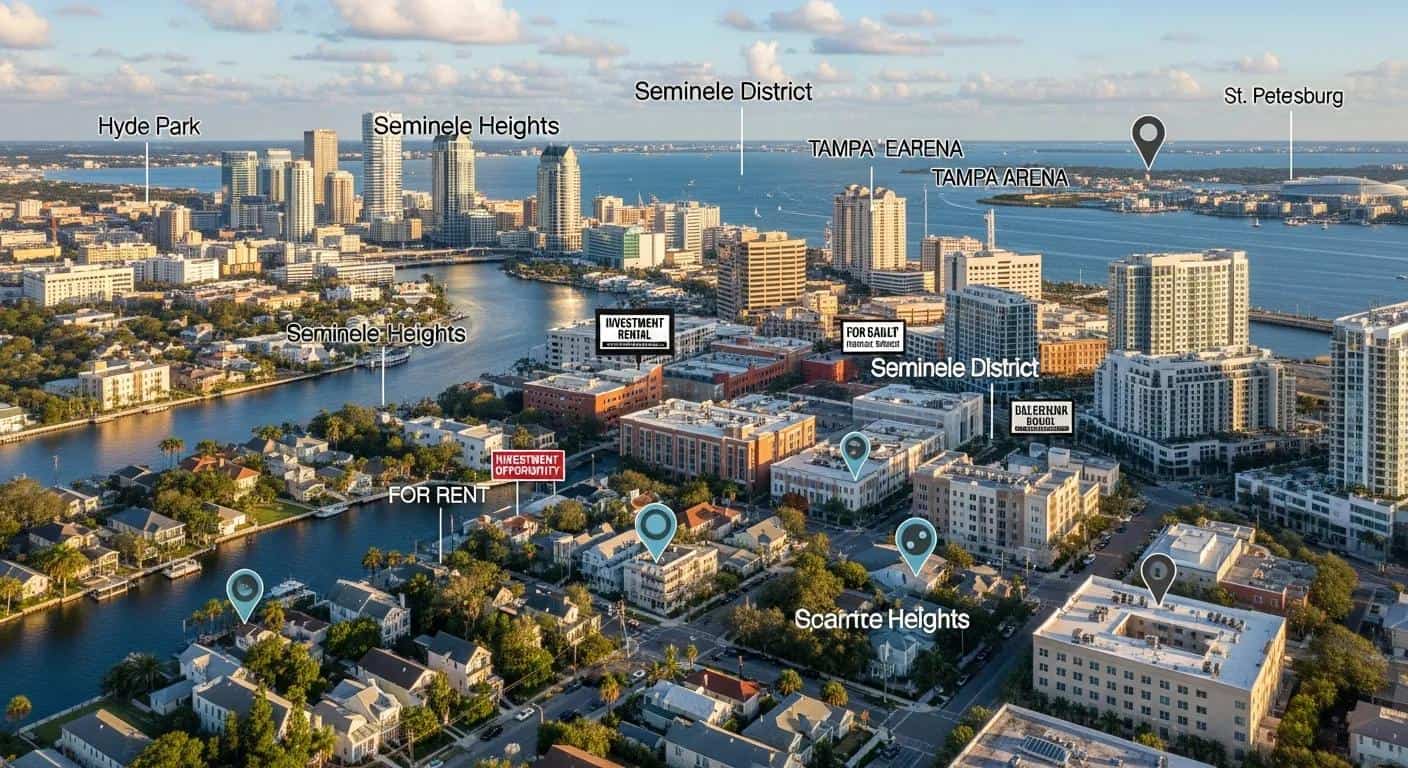
Finding the best neighborhoods in 2025 means weighing rent potential, vacancy trends, appreciation prospects, tenant profiles, and operational feasibility. Top opportunities appear where demand outpaces near-term supply or where value-add repositioning can push rents materially higher. Investors who can renovate or hold through repositioning often find greater upside in transitional neighborhoods; conservative buy-and-hold strategies favor stabilized submarkets with steady tenant demand. The list below highlights neighborhood types and the rationale to guide quick decisions.
Top neighborhood types for investors in 2025:
- Urban core areas with strong jobs and amenities — good for rent premiums and long-term demand.
- Transit-adjacent corridors where improved connectivity boosts desirability and occupancy.
- Emerging value-add neighborhoods where targeted renovations unlock above-market rent upside.
- Suburban family markets with single-family rental demand and stronger tenant retention.
The neighborhood comparison table below summarizes attributes investors use to compare micro-markets and align acquisitions with strategy.
This table links neighborhood traits to investor goals and helps prioritize acquisitions or rehab work.
What Are the Top Performing Neighborhoods for Rental Properties?
Top-performing neighborhoods in 2025 share proximity to job centers, transit, and lifestyle amenities that attract longer-term renters. Areas with steady employment and limited near-term multifamily completions outperform on occupancy and rent capture; neighborhoods with heavy new deliveries require sharper leasing and product differentiation. Tenant mixes vary — young professionals favor walkable urban nodes, families prioritize schools and parks, and short-term demand clusters around tourism corridors. Quantifying the tenant mix lets investors set amenities and renovation plans that match demand and drive renewals.
Matching property features to tenant expectations lowers vacancy risk and improves gross-to-net rent conversion, which leads into how local conditions affect returns.
How Do Local Market Conditions Affect Investment Potential?
Local factors — job growth, zoning, transit projects, and the supply pipeline — shape neighborhood returns by changing tenant demand and absorption capacity. Accelerating job growth tends to lift rents and occupancy; concentrated new construction can compress rents until absorption occurs. Zoning and approvals influence long-term supply elasticity, while infrastructure projects increase desirability and can support higher rents. Monitoring permits, employer moves, and transit improvements gives investors forward-looking signals to time acquisitions or renovations.
Understanding these local indicators lets investors adopt timing strategies — for example buying before absorption or renovating when demand outpaces supply — to improve expected ROI.
How Can Investors Maximize Rental Income and ROI in Tampa Bay?
Investors protect and grow rental income by pricing discipline, targeted value-add renovations, rigorous tenant screening and retention, and tight expense control. Market-aligned pricing captures rent without triggering longer vacancy, while selective interior and curb-appeal upgrades increase perceived value and support higher rents. Operational excellence — timely maintenance, digital lease workflows, and responsive tenant communication — reduces turnover and vacancy costs. The checklist below distills high-impact actions owners can start using immediately to protect and grow net rental income.
Research supports that dynamic pricing is a powerful tool for optimizing revenue in the rental market.
Dynamic Pricing Strategies for Rental Properties
Dynamic pricing is a revenue-management approach used across short- and long-term rental platforms to align price with demand and listing performance.
High-impact investor tactics include:
- Use dynamic, market-aligned pricing to balance rent capture and occupancy.
- Prioritize renovations that deliver the largest rent uplift per dollar, such as kitchens and durable flooring.
- Strengthen tenant retention with clear maintenance SLAs and renewal incentives.
- Implement preventative maintenance to reduce long-term expense volatility.
Studies have shown a direct link between strategic renovations and increased rental income.
Multifamily Renovation Impact on Rental Growth
Research examining apartment renovations finds measurable rent growth when upgrades are targeted and timed correctly.
The following steps translate those tactics into an implementation path for owners.
- Audit current rents : Compare to nearby comps and set a dynamic pricing cadence.
- Prioritize value-add projects : Choose upgrades with proven rent uplift and quick payback.
- Standardize tenant experience : Adopt response SLAs and renewal offers to boost retention.
- Track maintenance KPIs : Monitor cost-per-turn and preventative maintenance adherence to lower operating expense.
Once these fundamentals are in place, owners who prefer to outsource execution can gain from professional support that applies these tactics at scale. InvestPro Properties Inc. offers a Free Rental Analysis and full-service property management that operationalizes pricing optimization, professional marketing, tenant screening, and maintenance workflows to shorten lease-up and maximize rent capture. Our technology-driven marketing and screening translate these strategies into measurable KPIs for owners.
This integration shows how professional management converts investor strategy into day-to-day execution while keeping the investor’s priorities front and center.
What Strategies Improve Rental Income and Tenant Retention?
Improving income and retention starts with elevating the tenant experience and aligning the product with renter priorities. Cost-effective upgrades — modern appliances, quality flooring, and reliable HVAC — justify higher rents and attract longer-term tenants. Proactive communication, transparent maintenance scheduling, and modest renewal incentives lower turnover and re-leasing costs. Tracking a sample rehab that boosted renewals and cut vacancy illustrates how targeted capital expenditure often beats speculative development on a risk-adjusted basis.
Academic research reinforces the link between tenant satisfaction and lease renewals.
Boosting Tenant Satisfaction & Lease Renewals
Practical guidance for landlords and managers shows how improving tenant satisfaction increases renewal propensity and reduces turnover.
By focusing on high-ROI improvements and consistent operations, owners create a virtuous cycle of higher rents and lower turnover that compounds across the portfolio.
How Does Property Type Influence Return on Investment?
Property type shapes expected ROI and operational demands. Single-family rentals often deliver steady occupancy with moderate management needs; multifamily assets scale more efficiently but require sophisticated operations; condos face association rules; and short-term rentals can command higher nightly rates at the cost of greater turnover and demand variability. Risk and revenue profiles differ — short-term rentals are revenue-volatile but can outperform in tourism-adjacent locations, while multifamily can offer steadier, institutional-style returns. Match product to capital structure, hands-on involvement, and risk tolerance for consistent results.
Investors should model cash flow using conservative occupancy assumptions for each product and budget for the unique operational demands of the chosen asset class.
What Role Does Professional Property Management Play in Tampa Bay’s 2025 Market?

Professional property management tackles the operational and market challenges that limit owner returns by improving leasing speed, tenant quality, and compliance. Teams that use technology-driven marketing and rigorous screening shorten days on market and lower bad-tenant risk, while coordinated maintenance preserves asset condition and tenant satisfaction. In an uneven 2025 market, experienced management turns market signals into pricing and positioning decisions that protect income during soft patches and accelerate lease-up when demand is strong. The table below maps specific services to measurable owner outcomes.
Below is a concise mapping of common management services to investor benefits, showing how operational capabilities move KPIs.
This mapping demonstrates how professional services deliver measurable outcomes that protect and enhance investor returns.
How Does InvestPro’s Full-Service Management Address Market Challenges?
InvestPro Properties Inc. packages the tactics investors need into full-service property management: technology-driven marketing, thorough tenant screening, and disciplined maintenance workflows. Our marketing — quality photography and virtual tours — increases listing visibility and shortens days on market. Screening (credit, income, rental history, background) aims to improve tenant quality and reduce turnover risk. We coordinate 24/7 maintenance and regular inspections to preserve condition and keep tenants satisfied. Together, these services turn market analytics into daily execution that improves occupancy and net income for owners.
Using professional management lets investors concentrate on strategy while a focused team enforces consistent operational standards and tracks KPI improvements over time.
What Unique Guarantees and Technologies Differentiate InvestPro?
InvestPro combines practical guarantees and technology to reduce owner risk and accelerate lease-up. Our protections — including eviction and tenant-placement assurances and a Bad Tenant Rescue Program — give owners clear remediation options. Technology includes 3D virtual tours, distribution to top rental platforms, and photo-led marketing that attracts higher-quality leads. Backed by local experience and a proven review profile, these tools reduce vacancy days, improve tenant outcomes, and give owners confidence in execution.
The list below highlights core guarantees and technology benefits for owners.
- Eviction and Legal Compliance Guarantees : Reduces legal exposure and provides procedural assurance.
- Tenant Placement and Rent Deposit Guarantees : Improves predictability of lease-up and initial cash flow.
- Bad Tenant Rescue Program : Offers remediation pathways for problematic tenancies.
- Technology-driven Marketing Suite : 3D tours and professional photography that increase tenant interest and shorten days on market.
Together, these programs and tools yield measurable owner benefits — faster lease-up, better screening outcomes, and clearer legal processes — reflecting InvestPro Properties Inc.’s role as a full-service partner.
How Are Legal Compliance and Landlord Regulations Impacting Tampa Bay Rental Properties?
Landlord-tenant regulations and local compliance in 2025 affect lease timelines, notice periods, and eviction procedures, making compliance an operational priority. Local or state changes can alter security deposit rules, notice requirements, and inspection obligations, increasing administrative work for owners. Proactive compliance — using standardized lease forms, consistent recordkeeping, and timely responses to notices — reduces legal risk and the chance of costly disputes. Owners who bake compliance into daily workflows avoid disruption and help preserve income stability.
As legal frameworks evolve, landlords should document decisions and standardize tenant interactions to reduce ambiguity and exposure.
What Are the Key Legal Requirements for Tampa Bay Landlords in 2025?
Key landlord duties in 2025 include correct issuance of notices, proper security-deposit handling, compliance with local registration or licensing where required, and following statutory eviction timelines. Keeping thorough lease and inspection records supports defensible positions if disputes arise. Procedures vary by jurisdiction, so best practice is to use standardized lease templates and track statutory deadlines. Seek professional legal advice for contested or complex matters to avoid procedural missteps that can delay resolution.
These compliance practices form the foundation of practical mitigation steps owners can adopt to prevent escalation.
How Can Landlords Navigate Compliance to Avoid Risks?
Landlords can reduce compliance risk by standardizing leases, keeping organized records, scheduling regular inspections, and working with experienced management to handle legal procedures correctly. Outsourcing compliance tasks — like legal notices and eviction filings — to a qualified firm limits owner exposure and speeds correct procedural outcomes. InvestPro lists legal compliance among our service guarantees and provides eviction support and a Bad Tenant Rescue Program to help owners navigate disputes. These safeguards protect rental income while minimizing legal entanglement.
Adopting systematic documentation and inspection routines, together with expert management support, lowers both operational risk and owner workload.
What Is the Future Outlook and Forecast for Tampa Bay Rental Market Beyond 2025?
The market outlook beyond 2025 depends on supply delivery, job and population trends, and macro factors like interest rates. If job growth stays steady and new construction moderates, rents should continue a moderate upward path and vacancies normalize. If multifamily deliveries accelerate without matching household formation, rents could face pressure and leasing periods may lengthen. Investors should plan for both scenarios by keeping assets flexible: hold and improve properties in undersupplied pockets, and prioritize renter-focused upgrades or tighter screening where competition is strong.
Preparing for either path means clear acquisition criteria and an operational plan to shift leasing and renovation tactics as market signals change.
What Economic and Demographic Trends Will Influence the Market?
Population growth, job expansion, and household formation are the primary demographic drivers that will sustain rental demand in Tampa Bay. Migration patterns that favor the region and new employer activity will support continued demand. Conversely, macro risks — interest-rate shocks or rising unemployment — could slow household formation and reduce near-term demand. Investors should watch local employment reports and demographic indicators to anticipate changes in renter composition and demand intensity.
Linking demographic trends to asset strategy helps investors target the right property types and tenant segments as the market evolves.
How Will New Construction and Supply Affect Vacancy and Rent Growth?
New construction and the delivery pipeline determine absorption needs and competitive pressure on rents. If deliveries slow, existing unsatisfied demand should support rent growth; if deliveries surge — especially in multifamily corridors — expect temporary vacancy increases and concession pressure until absorption completes. Timing matters: buying during early absorption can deliver strong returns, while buying into oversupplied submarkets often requires renovation or repositioning to differentiate product. Flexible acquisition and renovation plans help manage timing risk tied to cyclical supply shifts.
Scenario-aware strategies — hold, renovate, or reposition depending on supply trajectories — enable investors to adapt and protect returns as construction dynamics change.
Frequently Asked Questions
What are the benefits of investing in Tampa Bay’s rental market in 2025?
Investing in Tampa Bay in 2025 offers diverse neighborhoods with varied rental upside. Strong local job growth and population inflows continue to support rental demand. Emerging neighborhoods present value-add opportunities through targeted renovations, while stabilized areas provide steady cash flow. The market’s uneven rent growth and selective tenant demand give savvy investors chances to optimize strategy for higher returns while managing vacancy and turnover risk.
How can landlords effectively screen tenants in the current market?
Effective screening combines background checks, credit and income verification, and rental-history review. Use technology-driven tools to streamline the process and stay compliant. Clearly defined selection criteria reduce the risk of problem tenancies. Prioritizing quality over speed improves retention and cuts turnover costs, which strengthens long-term cash flow.
What role does technology play in property management for rental properties?
Technology boosts efficiency and tenant satisfaction. Online payments, maintenance portals, virtual tours, and data analytics streamline operations and improve marketing and pricing decisions. Leveraging tech reduces vacancy, optimizes revenue, and gives landlords data-driven insights into market trends and tenant preferences.
What are the common challenges landlords face in the Tampa Bay rental market?
Common challenges include shifting vacancy rates, rising tenant expectations, and changing compliance requirements. Competition requires effective marketing to attract quality tenants while managing operating costs. Navigating local regulations can affect leasing and eviction processes. Staying informed and maintaining proactive tenant communication helps landlords mitigate these challenges.
How can landlords prepare for potential economic downturns affecting rental income?
Prepare by keeping cash reserves, diversifying holdings, and using dynamic pricing to respond to market changes. Focus on tenant retention through timely maintenance and clear communication to reduce turnover costs. Regularly review local market indicators and adapt operations to preserve rental income during downturns.
What are the key indicators landlords should monitor in the Tampa Bay rental market?
Monitor vacancy rates, average rents, and local job-growth data. Track population migration and household formation for demand signals. Watch new construction projects and zoning changes to anticipate supply shifts. Staying on top of these indicators helps landlords make strategic choices to optimize returns.
Ready to Optimize Your Tampa Bay Rental Investments?
Don’t navigate the dynamic Tampa Bay rental market alone. Leverage InvestPro Properties Inc.’s 27+ years of local expertise and proprietary market insights to maximize your returns and minimize your risks. Whether you own properties in Tampa, St. Pete, Clearwater, or Brandon/Riverview, our full-service property management and industry-leading guarantees are designed to protect your investment and enhance your cash flow. Get a Free Rental Analysis today and discover your property’s true potential.